
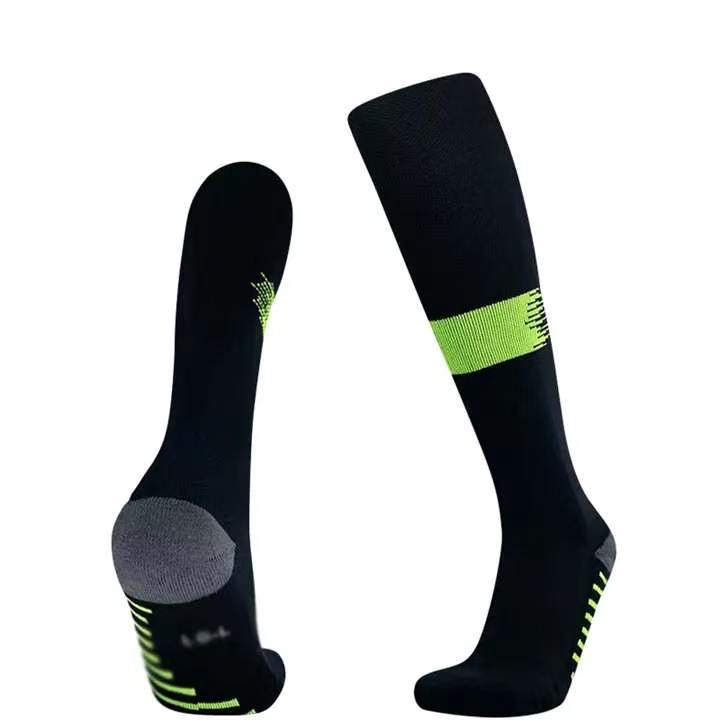
Agree a football sock measurement by naming the offered version, the dimension, its start and end points, the unit and the sample condition. Ask the supplier to show the same points on its size reference. Keep laid-flat dimensions separate from circumference or wearer-size descriptions; a catalogue title does not supply a measured size chart.
Treat the catalogue size language as the starting point
The Professional Over-the-Calf Football Socks – Unisex listing describes the product as over-the-calf and mentions adults and teenagers. Those descriptions identify the catalogue positioning. They do not supply numerical foot length, leg length, cuff dimensions or a confirmed size conversion for a particular offer.
When enquiring about wholesale football socks, ask for the size reference associated with the exact version being quoted. Retain the supplier size label without translating it into another sizing system yourself. If several styles are under discussion, keep each style-to-size association explicit rather than applying one chart to all catalogue pictures.
Name the dimension before comparing a number
A number called sock length may refer to different endpoints. Ask the supplier to identify what it measures and show the points in a marked photograph or drawing. A foot-section measurement and a leg-section measurement answer different purchasing questions, even when both are expressed in the same unit.
The buyer can propose the dimensions it needs clarified, such as the foot section, the leg section and the cuff opening. These are enquiry fields, not claimed measurements of this product. Agree the endpoints for each field with the supplier and keep the annotated reference beside its values so another reviewer can reproduce the meaning.
Keep sample condition beside the endpoints
Ask whether the supplier value describes a relaxed laid-flat sample, a stretched condition or another stated basis. Retain that condition with every dimension. A comparison is difficult to interpret when one value refers to a relaxed sample and another was recorded while the fabric was extended.
Do not invent a stretch force, recovery limit or acceptance tolerance. Where such a condition matters to the buyer, request the supplier method and agree how the measurement will be recorded. The catalogue material wording Polyester + Spandex does not establish an extension value or a size fit result for every pictured style.
Build a measurement-reference sheet
Use a compact sheet to connect the supplier chart, an actual sample and the requested dimensions. Complete measured values only during a real review or from a clearly identified supplier response. The sheet should preserve the method before it becomes a comparison table.
Measurement field | Question to agree | Record to retain
Offered version | Which item and size label does this sheet cover? | Supplier item, selected style and size reference
Dimension name | Which part of the sock is being described? | Separate foot, leg or cuff field
Reference points | Where does the measurement start and finish? | Marked drawing or photograph with named endpoints
Unit | Which unit applies to the stated value? | Unit written with the value
Sample condition | Is the sample relaxed, extended or otherwise defined? | Supplier method or agreed observation condition
Sample identity | Which actual sample was reviewed? | Sample reference and review date if received
Comparison basis | What supplier value or requirement is being compared? | Applicable chart revision and any agreed tolerance
Do not substitute flat width for circumference
If a supplier records a cuff or leg opening as a laid-flat width, preserve that label. Do not silently treat it as a circumference or a wearer measurement. Ask which type of dimension the supplier intends and whether a separate measurement is required for the buyer specification.
Likewise, a sock measurement is not automatically a shoe-size conversion or a guarantee of fit on every wearer. Ask the supplier how its size label relates to the offered product and intended selection. Retain any supplied conversion reference with its scope instead of creating an unsupported universal mapping.
Compare like references during an actual sample review
When a physical sample is available, associate it with the offered style and size before comparing dimensions. Record the actual observation using the agreed points and condition. This article does not report a received sample, a measured dimension or a passed inspection; it explains how to structure that review when it occurs.
If an observed value differs from the supplier reference, retain both and check whether the endpoints, units and sample conditions match. Do not declare a product failure against a tolerance that has never been agreed. Ask the supplier to clarify the discrepancy and identify any revised chart or proposed sample version.
Carry the method into the selected order reference
Keep the accepted size label and measurement reference with the quotation. If the supplier proposes another style or size revision, ask whether the same sheet still applies. A familiar product title should not hide a changed measurement basis.
A useful purchasing record distinguishes what the supplier states, what the buyer actually observes and what both parties have selected. It leaves fit, performance and commercial terms to their relevant confirmations. The result is a size discussion with reproducible meaning rather than a collection of unlabelled numbers.
• Associate the chart with one exact offered style and size label.
• Name each dimension and retain its start and end points.
• Keep units and sample condition beside every value.
• Record actual sample observations separately from supplier declarations.
Frequently asked questions
Does over-the-calf identify a numerical leg length?
It is the catalogue description. Request the supplier dimension and its measuring points for the specific offered version.
Can a catalogue image be measured as a size chart?
The images have no confirmed scale or measurement method. Ask for a supplier size reference rather than calculating dimensions from the display.
Is laid-flat cuff width the same as circumference?
Keep these labels separate. Clarify which dimension the supplier provides instead of silently converting one into the other.
What should be checked when sample and chart values differ?
First compare the offered version, endpoints, units and sample condition. Then ask for clarification against an identified requirement or agreed tolerance.
Send the selected version and measurement questions through Yanlei Knitwear contact. Compare listings in the product catalogue and related purchasing topics in the article archive.
Product and contact references
https://ylknitwear.com/product/professional-over-the-calf-football-socks-unisex/
https://ylknitwear.com/contact/
https://ylknitwear.com/products/
https://ylknitwear.com/blog/