
Football Sock Fibre RFQs: Define the Blend Scope
What should a football-sock fibre-content enquiry identify? Ask the supplier for the fibre names, percentages and declared scope for the exact offered sock. Establish whether the statement represents the complete item or separately described parts. Keep a whole-item declaration distinct from a yarn description or a statement about one zone. Catalogue material names and photographs alone do not supply that breakdown.
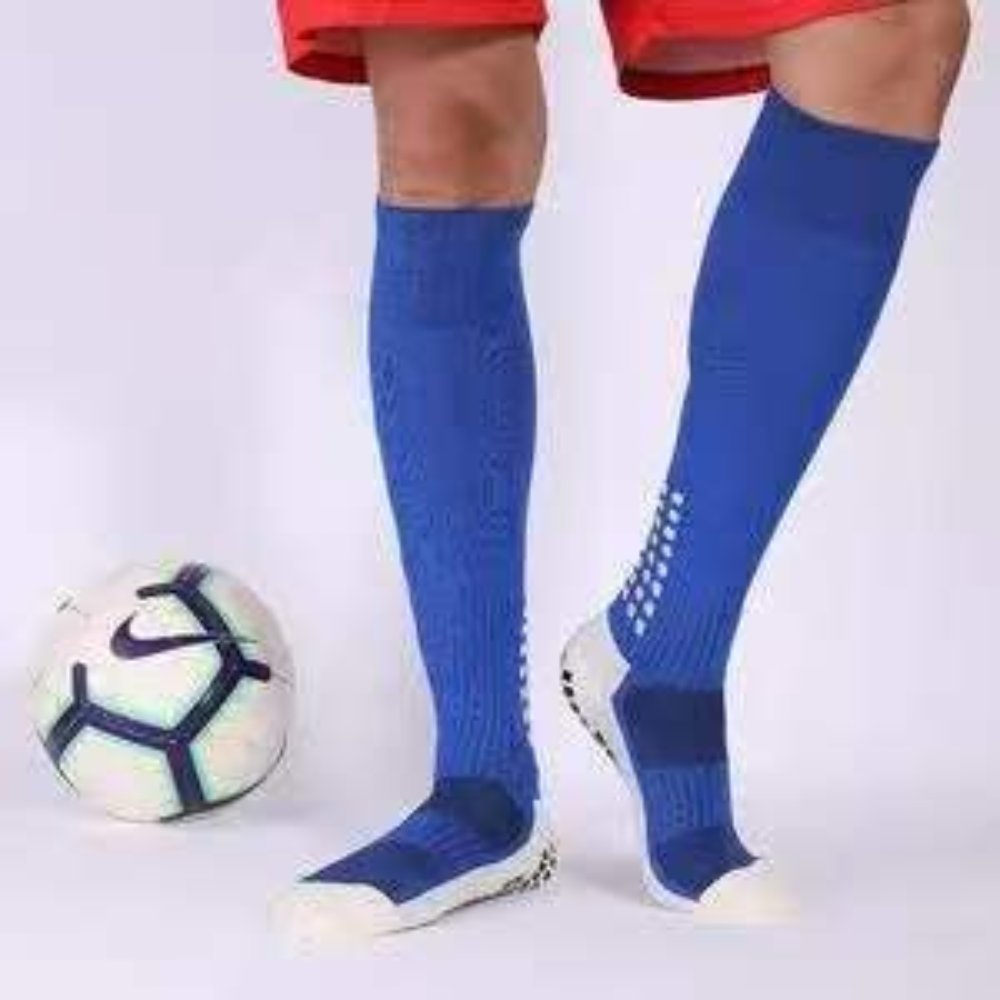
Official catalogue appearance reference. The visible blue socks do not reveal fibre percentages or establish a relationship with a brand shown on a scene prop.
Start with the named football-sock offer
YL Knitwear lists Professional Over-the-Calf Football Socks Unisex. The saved product page names Polyester + Spandex as its material description. That wording provides a starting point for a supplier enquiry; it does not establish a percentage for either fibre or explain how the description applies to each part of the proposed sock.
For wholesale football socks, identify the actual supplier style and offered revision before requesting a declaration. A similar colour, stripe or catalogue photograph should not silently extend one material statement to another appearance. Ask which specific proposal the response represents.
This purchasing task concerns the content and scope of a material declaration. It is separate from determining pairs per package, mapping pictured styles to a quotation or agreeing measurement points. Those records can share the same product identity while answering different order questions.
Buying field
Requested supplier response
Offer identity
Supplier style reference and the actual proposed revision.
Declaration scope
Complete sock, identified part or specifically named yarn.
Fibre names
Supplier-confirmed names used in the applicable declaration.
Percentage basis
Declared proportions and the scope to which they apply.
Part mapping
Named areas where a separate statement is proposed.
Supporting reference
Applicable specification, supplier declaration or identified report.
Distinguish a yarn description from a finished-item statement
Ask whether the supplier response describes an input yarn, a knitted area or the complete finished sock. A yarn name can be relevant to production without being the full content declaration for every component. Preserve the supplier description of its scope rather than treating these statements as interchangeable.
If a response names several yarns, ask how they relate to the proposed item. The purchasing record should make clear whether each entry is an input reference, a separate part or an overall content statement. Do not calculate a finished blend from incomplete yarn information.
Request the applicable units and percentage basis where a numerical declaration is supplied. This article does not assign a polyester or spandex percentage to the catalogue product. The supplier must identify the actual breakdown and explain the item or part it represents.
A separate official catalogue appearance reference. The photograph does not show a fibre declaration or establish performance, brand authorization or an identical composition.
Name any separately described parts
If different material statements are proposed for the cuff, leg, foot, heel, toe or another area, ask the supplier to identify each part clearly. These are enquiry locations, not a claim that this catalogue sock has a different fibre blend at every location.
A simple part map can connect the written response to the selected sock. Where a separately added element is part of the actual proposal, ask how it is described within the supplier information. Do not infer the material of a visible pattern, sole area or decorative mark from colour and surface appearance.
Keep an overall declaration and a part-specific statement on their own lines. Another buyer should be able to tell which response covers the whole item and which is limited to a named member. An unanswered area should remain an open question rather than receiving an assumed value.
Ask which variants the response covers
Request confirmation of the proposed size and colour applicability. A supplier may identify one declaration as applicable to several offered versions, but that relationship needs an explicit response. The same product family name does not establish identical content for every catalogue image.
Where an alternative material or construction is offered, retain the alternative reference with its own declaration scope. Make the connection visible in the quotation revision. Avoid carrying a statement from the first sample to a later changed proposal without asking whether it remains applicable.
The blue, white-striped and white/red catalogue photographs here are visual enquiry references. They do not establish that all pictured socks share the same composition, are currently available together or belong to one interchangeable commercial item.
Official catalogue socks used to locate a material enquiry. The visible knit and colour do not establish a fibre percentage or a shared blend across pictured styles.
Keep content evidence separate from performance wording
A supplier content declaration identifies what is being declared for the proposed item. It does not by itself demonstrate compression, grip, cushioning, moisture management or another performance outcome. Any required performance evaluation needs a separate defined request and applicable supporting information.
Where the buyer requests a report, ask for the represented product or sample identity and the scope of that report. Keep it connected to the offered version. A document naming a different article cannot be treated as evidence for this sock simply because the general product category is similar.
Keep catalogue adjectives separate from confirmed content fields. The product photograph is useful for locating the enquiry but cannot reveal fibre percentages. Visible branding on a scene prop also provides no basis to state a commercial relationship or authorization.
Retain a declaration record with the accepted proposal
Keep the offered style identity, declaration scope, named fibres, supplier percentages and applicability response with the quotation revision. Preserve any supporting reference by its actual title and represented sample. This makes the material response usable without relying on a remembered photograph.
If a proposed fibre or part changes, ask for the revised declaration and identify which earlier response is superseded. Record the buyer decision for the changed offer. A clear revision record supports purchasing communication while leaving unverified commercial terms and future shipment outcomes outside the statement.
Buyer FAQ
Does Polyester + Spandex specify the percentages?
The saved catalogue wording names materials without establishing their numerical breakdown. Request the applicable supplier declaration.
Can a yarn statement describe the entire sock?
Ask the supplier to confirm its scope. An input yarn description should not silently become a complete-item declaration.
Must every sock part have a different composition?
No difference is assumed here. Ask whether any separately described part exists in the actual offer and how it is represented.
Can photographs establish fibre content?
They can identify a visual reference but do not establish fibre names, proportions or declaration scope.
Does the declaration prove sports performance?
No performance outcome follows merely from the material statement. Keep a required evaluation separately defined.
Use the football-sock product reference, request a scoped material declaration, and read the sock purchasing blog for related order questions.
Identify the offered sock and applicable revision.
Distinguish whole-item, part and yarn statements.
Retain the supplier response with its declared scope.
wholesale football socksB2B supplier sample record